Yew and Eternity: The Botanical Roots of Immortality
December 9, 2025
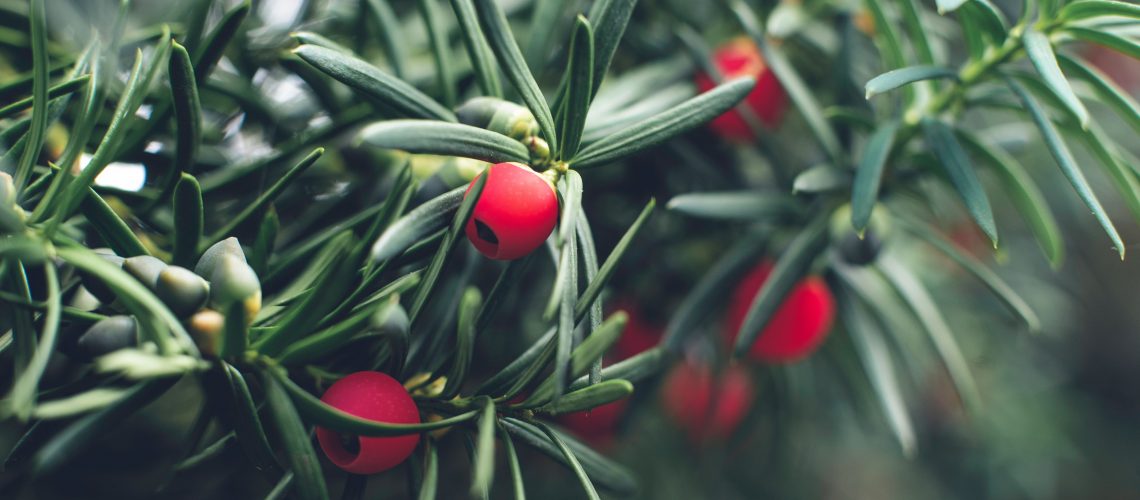
For centuries, the yew tree has fascinated humans with its remarkable longevity, dark evergreen foliage, and deep symbolic significance. Found across Europe, Asia, and North America, yews are living monuments that seem to defy time itself. They have been intertwined with cultural, religious, and medicinal practices for millennia, serving as emblems of immortality, resilience, and continuity. Understanding the yew requires exploring its biology, historical importance, and the human desire to find permanence in a fleeting world.
The Biology of the Yew: A Living Paradox
Yews (genus Taxus) are unique conifers with extraordinary survival strategies that contribute to their association with immortality.
Longevity and Growth Patterns
Some yew trees live for thousands of years, making them among the longest-living organisms on Earth. For instance, the Fortingall Yew in Scotland is estimated to be over 5,000 years old. Yews grow slowly, with dense wood and flexible branches, which allows them to withstand environmental stress, storms, and disease.
Evergreen Foliage
Unlike deciduous trees, yews maintain their dark green needles year-round. This persistent greenery has symbolized eternal life in many cultures, representing resilience, continuity, and stability.
Reproductive Strategy
Yews are dioecious, meaning male and female reproductive structures grow on separate trees. Female yews produce bright red arils surrounding toxic seeds. These arils attract birds, which help disperse seeds, ensuring the propagation of the species. This reproductive strategy contributes to their enduring presence in forests and landscapes.
Toxicity and Medicinal Uses
The yew is famous for its potent chemical compounds, which have both protective and medicinal properties.
Taxanes and Defense Mechanisms
Yews produce taxanes, a class of chemical compounds that deter herbivores and pathogens. Almost all parts of the tree, especially seeds and leaves, are highly toxic if ingested. This toxicity has allowed yews to survive in the wild, undisturbed by animals or human consumption for millennia.
The Role in Medicine
Despite its toxicity, the yew has provided one of modern medicine’s most important compounds: paclitaxel (Taxol), a chemotherapy drug used to treat various cancers. Extracted from the bark of the Pacific yew (Taxus brevifolia), paclitaxel interferes with cell division, exemplifying how a toxic plant can harbor life-saving properties.
Balancing Danger and Utility
The dual nature of the yew—as both deadly and healing—reflects human ingenuity in harnessing natural resources. Its use in medicine transforms a symbol of death into a symbol of life and survival.
Cultural Significance and Symbolism
Across civilizations, the yew has embodied concepts of eternity, death, and rebirth.
Celtic and Pagan Traditions
In Celtic mythology, yews were sacred trees, often planted near sacred sites or burial grounds. Their longevity and evergreen foliage symbolized immortality and the cyclical nature of life and death.
Christian Cemeteries
In medieval Europe, yews became strongly associated with churchyards and cemeteries. Planting yews near graves symbolized eternal life, and their toxic nature offered a natural deterrent against livestock grazing in sacred areas.
Folklore and Superstition
Legends surrounding yews are abundant. They were believed to protect against evil spirits, and in some traditions, cutting a yew without permission could bring misfortune. Such beliefs enhanced the mystique surrounding this remarkable tree.
Horticultural Characteristics and Cultivation
Yews are both resilient and versatile, making them popular in landscaping and conservation.
Soil and Climate Requirements
Yews thrive in a wide range of soils but prefer well-draining conditions. They tolerate shade, wind, and pollution, which allows them to grow in urban settings as well as ancient woodlands.
Longevity in Gardens
Gardeners prize yews for their longevity and adaptability. Topiary yews, clipped into ornamental shapes, can survive for centuries, making them living legacies in private and public gardens.
Propagation Techniques
Yews are propagated through seeds or cuttings. However, slow growth and dioecious reproduction present challenges. Gardeners must manage genetic diversity carefully to maintain healthy populations and desired traits, such as dense foliage and deep green color.
Yews and the Concept of Immortality
The yew’s connection to immortality is both symbolic and literal.
A Tree That Outlives Generations
Yews often outlive human lifespans by centuries or millennia, making them natural symbols of continuity. Entire communities have grown up around these trees, witnessing countless human generations.
Death, Rebirth, and the Eternal Cycle
The yew’s evergreen foliage, its role in cemeteries, and its ability to regenerate after damage connect it to themes of death and rebirth. It embodies the paradox of mortality and permanence, reminding humans of life’s cyclical nature.
Inspiration for Art and Literature
The yew has inspired countless works of art, literature, and poetry, often serving as a metaphor for endurance, memory, and spiritual transcendence. Its cultural resonance underscores the universal human fascination with longevity and the quest for immortality.
Environmental and Conservation Importance
Yews play an important ecological role and require careful conservation.
Biodiversity and Habitat
Yews provide habitat and food for birds and small mammals. Their dense foliage and toxic seeds create unique ecological niches that support biodiversity.
Threats and Protection
Some yew species face threats from overharvesting, urban development, and climate change. Conservation programs aim to protect ancient trees, ensure sustainable propagation, and preserve genetic diversity.
Ethical Considerations in Cultivation
Balancing horticultural interest with ecological responsibility ensures that yews continue to thrive for future generations, maintaining their symbolic and biological significance.
Lessons from the Yew
The study and appreciation of yews reveal insights into human culture, biology, and philosophy.
Patience and Longevity
Observing yews teaches patience and perspective, reminding us that life extends far beyond individual lifespans.
Human-Nature Interaction
The yew exemplifies how humans assign meaning to nature, integrating botanical knowledge, spiritual symbolism, and practical uses.
Survival and Resilience
From its chemical defenses to its ecological adaptability, the yew demonstrates strategies for survival that inspire both scientific study and philosophical reflection.
Key Takeaways
-
Yews are exceptionally long-lived, slow-growing trees with evergreen foliage that symbolizes immortality.
-
Their toxicity, caused by taxanes, protects the tree and has been harnessed in modern medicine.
-
Yews hold deep cultural and spiritual significance, from Celtic traditions to Christian cemeteries.
-
They are highly adaptable, thriving in diverse soils, climates, and urban environments.
-
Cultivation requires careful attention to propagation, genetic diversity, and environmental conditions.
-
Yews symbolize the cycle of life, death, and rebirth, bridging the natural and spiritual worlds.
-
Conservation of ancient and wild yews preserves both biodiversity and cultural heritage.
-
Studying yews offers broader lessons about resilience, longevity, and human connection to nature.
FAQ
Why are yews associated with immortality?
Their extraordinary longevity, evergreen foliage, and presence in sacred sites make them symbols of eternal life.
Are yews poisonous?
Yes; most parts of the tree, especially seeds and leaves, contain toxic compounds. Only certain parts, like arils, are safe for birds.
Can yews be grown in home gardens?
Yes, yews are adaptable to various soils and climates, but slow growth and dioecious reproduction require careful planning.
What medicinal uses do yews have?
The Pacific yew (Taxus brevifolia) provides paclitaxel, a chemotherapy drug critical in treating several cancers.
How can ancient yews be protected?
Through conservation programs, sustainable cultivation, and protection from urban development or overharvesting.
Conclusion
The yew tree embodies a rare convergence of biological resilience, cultural symbolism, and human fascination with longevity. Its dark, evergreen presence in forests, gardens, and cemeteries has inspired stories, art, and medicine across centuries. By studying and preserving yews, we not only safeguard a botanical marvel but also maintain a living connection to history, spirituality, and the enduring mysteries of life and death. Through their survival, yews remind us that eternity is not just an abstract concept—it is a tangible, living reality.