Plant Time: How Trees Measure Seasons and Years
February 20, 2026
Understanding how plants “sense” time allows us to better appreciate the complex mechanisms of their life and adaptations. Unlike animals, plants do not have a nervous system, yet they possess an astonishing ability to respond to seasonal changes, measure years, and synchronize physiological processes with their environment. These biological clocks ensure proper timing of flowering, fruiting, dormancy, and adaptation to climatic conditions.
Studying plant biological rhythms is important for forestry, agriculture, climate science, and biodiversity conservation. It allows us to predict harvests, understand the effects of climate change, and reveal the connection between annual plant cycles and historical events.
How Plants “Sense” Time: Photoperiodism and Circadian Rhythms
 One of the key mechanisms through which plants measure time is photoperiodism — the response to the length of the day. Plants use light to determine the season, synchronize flowering, and prepare for dormancy.
Photoperiodism
Plants are classified as long-day, short-day, or day-neutral depending on their response to daylight:
-
Long-day plants (e.g., spinach, rye) flower when the day length exceeds a certain threshold.
-
Short-day plants (e.g., chrysanthemum, soybean) flower when the day is shorter than a specific length.
-
Day-neutral plants (e.g., tomatoes) flower regardless of day length.
Photoperiodism allows plants to avoid unfavorable conditions. For example, spring flowers bloom only when the day is long enough to support photosynthesis and growth.
Circadian Rhythms
In addition to seasonal control, plants have circadian rhythms — internal clocks that follow roughly a 24-hour cycle. These rhythms regulate stomatal opening, photosynthesis, hormone production, and enzyme activity. For example, sunflower leaves follow the sun throughout the day to maximize light absorption.
Circadian rhythms synchronize internal processes with the environment. If a plant experiences unusual light conditions, its rhythms may shift, affecting growth and development.
Annual Rings: Recording Time in Wood
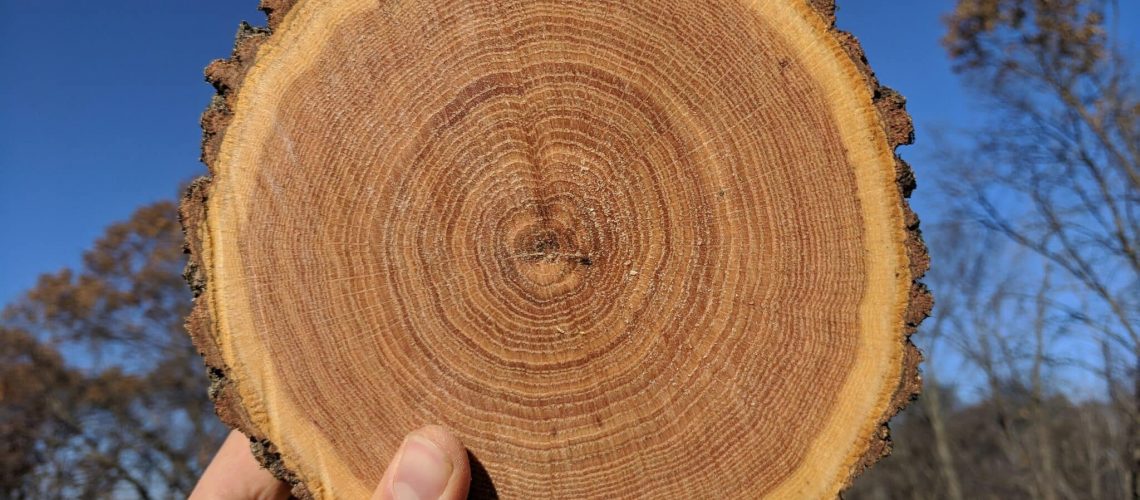
One of the most tangible ways for trees to “count years” is through annual rings. Each year, trees lay down a new layer of wood that reflects seasonal changes.
Ring Formation Mechanism
An annual ring consists of two zones:
-
Earlywood (springwood) — light and porous, formed during periods of active growth.
-
Latewood (summerwood) — dark and dense, formed when growth slows.
The table below illustrates the structure of an annual ring:
| Wood Layer | Time of Formation | Characteristics |
|---|---|---|
| Earlywood | Beginning of season | Light, porous, fast growth |
| Latewood | End of season | Dark, dense, slow growth |
Annual rings allow scientists to determine the age of a tree, past climate conditions, and even historical events. For example, drought years produce narrow rings, while wet years produce wide rings.
Scientific Applications
Dendrochronology, the study of tree rings, helps reconstruct climate histories, study forest ecosystems, and date archaeological findings. For instance, analyzing the rings of old wooden structures can accurately determine the year of construction or renovation.
Seasonal Adaptations and Plant Physiology
Plants employ various strategies to synchronize with seasons: dormancy, leaf shedding, nutrient storage, and timed flowering.
Leaf Shedding and Dormancy
Deciduous and forest trees in temperate regions shed their leaves in autumn to reduce water loss and prepare for winter. In the tropics, some species enter a brief dormancy during the dry season.
Flowering and Fruiting
Flowering is closely linked to the time of year. Cherry, apple, and pear trees bloom in spring when temperatures are stable, and pollinating insects are active. Tropical plants such as banana or mango may respond to rainy seasons using photoperiodism and hydropedism (reaction to moisture).
Resource Storage
Trees store nutrients in roots and trunks during dormancy to support rapid growth in spring. These mechanisms demonstrate that plants actively “sense” time and rely on internal biological clocks for survival.
Historical and Cultural Significance of “Plant Time”
Understanding plant rhythms has had both practical and symbolic significance throughout human history.
Agricultural Practices
Farmers since ancient times observed seasonal cycles of trees and plants to plan planting, harvesting, and food storage. In Eastern Europe and Asia, knowledge of photoperiodism and dormancy periods was essential for cultivating fruit trees and rice.
Historical Records
Tree ring analysis helps reconstruct past climate conditions. Studying rings in ancient oaks has revealed harsh winters in Europe and droughts in North America. Such data help us understand how climate change affected human societies and agriculture.
Table: Climate Influence on Annual Ring Formation
| Year | Climatic Feature | Ring Width | Impact on Tree |
|---|---|---|---|
| 1500 | Severe drought | Narrow | Slow growth, stress |
| 1603 | Long rainy season | Wide | Rapid growth, active wood formation |
| 1750 | Mild winter | Medium | Balanced growth |
| 1901 | Cold spring | Narrow | Late flowering, reduced yield |
These data show that trees record environmental history, allowing scientists to “read” it through wood rings.
Key Takeaways
-
Plants use photoperiodism and circadian rhythms to synchronize with seasonal and daily cycles.
-
Tree rings reflect past climate conditions and help date historical events.
-
Leaf shedding, flowering, and nutrient storage are adaptive responses to seasonal changes.
-
Studying plant time is crucial for agriculture, forestry, and understanding climate impacts on ecosystems.
Conclusion
Plants possess an extraordinary ability to sense time and synchronize their biological processes with the environment. Photoperiodism, circadian rhythms, annual rings, dormancy, and flowering demonstrate the high level of organization in trees and other plants.
Studying plant biological clocks allows humans to better manage agriculture, predict the consequences of climate change, and conserve ecosystems. Plant time is not an abstract concept — it is a concrete system of signals and adaptations that ensure survival, growth, and reproduction. Understanding these processes deepens our perception of nature and teaches us to appreciate the harmony of the living world.