Ghost Mushrooms and Bioluminescent Forests
January 29, 2026
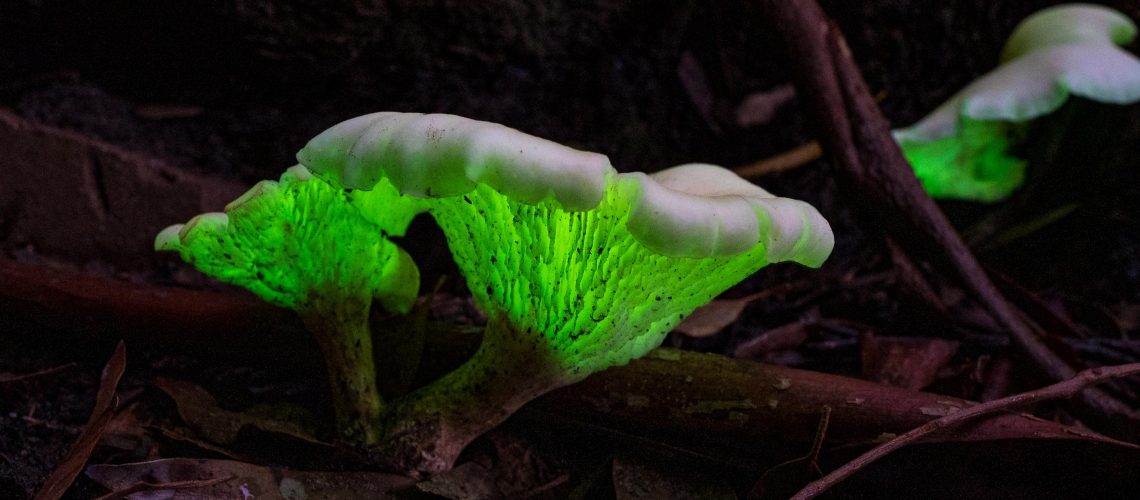
Forests conceal many mysteries, but few are as mesmerizing as the soft, ethereal glow of bioluminescent fungi. Among the most captivating are Omphalotus nidiformis, commonly known as ghost mushrooms, which illuminate the forest floor in hauntingly beautiful shades of green. Beyond their aesthetic allure, these luminous organisms play a vital role in forest ecology, demonstrating complex interactions with their environment and other species.
The Science of Bioluminescence
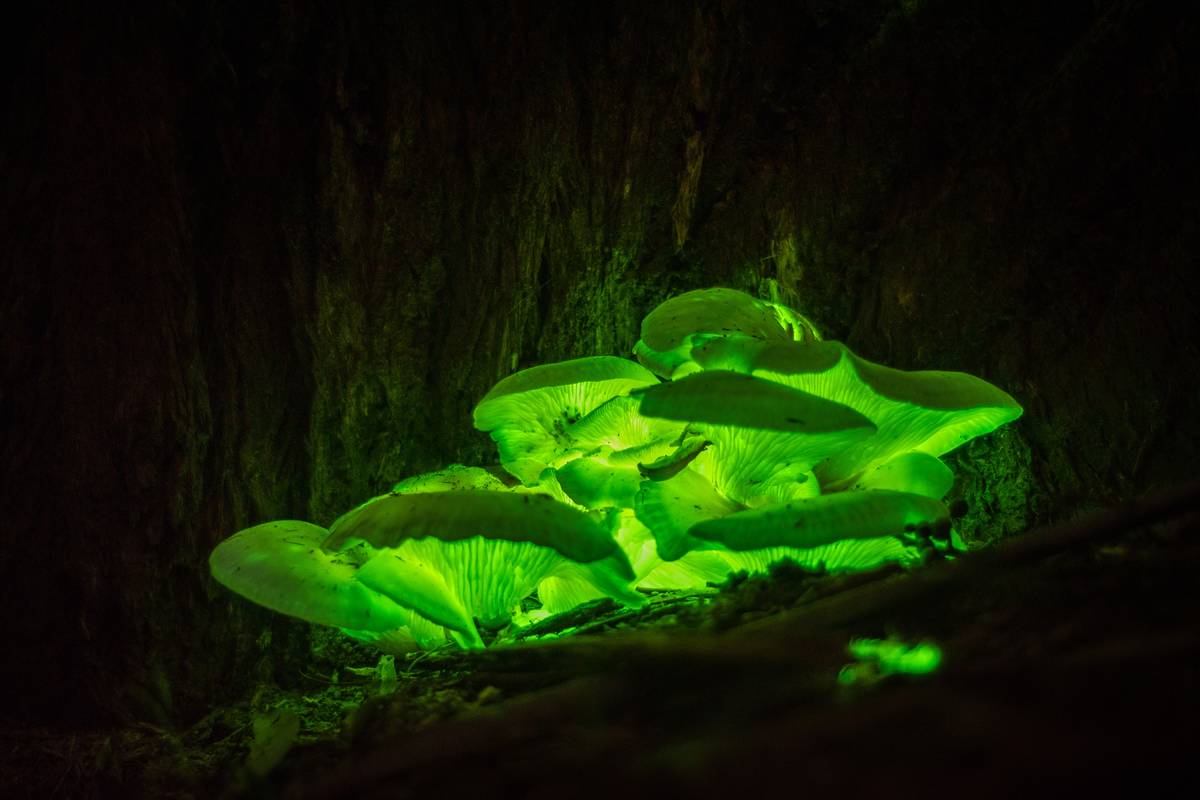
Bioluminescence is the production of light by living organisms through a chemical reaction. In Omphalotus nidiformis, specialized enzymes called luciferases catalyze the oxidation of luciferin molecules, releasing energy as visible light. This process allows the mushroom to emit a soft glow, often visible in complete darkness, creating a surreal visual effect in nighttime forests.
Unlike fluorescence, which requires external light to emit color, bioluminescence is self-generated. In ghost mushrooms, the luminescence is most prominent on the gills and cap, which may serve ecological purposes beyond mere visual spectacle.
Ecological Significance of Bioluminescence
One prevailing theory suggests that the glow of ghost mushrooms attracts nocturnal insects and other small animals, which inadvertently aid in spore dispersal. This symbiotic relationship enhances the reproductive success of the fungus, ensuring the spread of its genetic material across the forest ecosystem.
Key ecological roles of ghost mushrooms include:
-
Attracting insects and small animals for spore dispersal.
-
Contributing to nutrient cycling by decomposing organic matter.
-
Supporting microfauna and maintaining forest biodiversity.
-
Potentially deterring predators through visual warning signals.
-
Integrating into complex food webs and ecological networks.
Bioluminescence may also deter certain predators. Some studies indicate that the subtle glow signals unpalatability or toxicity, a form of chemical communication that helps the mushroom avoid being consumed.
Omphalotus nidiformis: Life and Habitat
Native to southeastern Australia, Omphalotus nidiformis thrives in temperate forests, particularly in decaying wood and leaf litter. The fungus is saprotrophic, meaning it obtains nutrients by decomposing organic matter. Through this process, ghost mushrooms contribute to nutrient cycling, breaking down complex organic compounds into simpler forms that nourish plants and other microorganisms.
The growth of Omphalotus nidiformis is influenced by moisture, temperature, and light conditions. Its luminescence is most noticeable during humid nights in late spring to autumn, coinciding with optimal conditions for spore dispersal.
Morphology and Identification
Ghost mushrooms are characterized by their ivory to pale cream coloration and distinctive gills that radiate beneath the cap. Their bioluminescent glow is subtle but persistent, producing a greenish light that can be seen from several meters away under low-light conditions. While visually enchanting, Omphalotus nidiformis is toxic to humans and should not be consumed, illustrating the dual nature of beauty and danger in nature.
Symbiosis and Forest Ecology
Fungi like ghost mushrooms play integral roles in forest ecosystems, often forming symbiotic or mutually beneficial relationships with other organisms. While Omphalotus nidiformis is primarily saprotrophic rather than mycorrhizal, it contributes indirectly to plant health by recycling nutrients and maintaining soil fertility.
Bioluminescent fungi also influence forest microfauna. By attracting insects for spore dispersal, ghost mushrooms support complex food webs. Some insects feed on the spores or surrounding detritus, transferring energy through the ecosystem. The glow of these fungi thus serves both reproductive and ecological functions, integrating them deeply into the forest’s biological network.
Interaction with Other Species
Research suggests that bioluminescent fungi may facilitate nocturnal animal behaviors. For instance, small mammals or insects drawn to the light may act as inadvertent pollinators or seed dispersers, enhancing overall forest biodiversity. Such interactions highlight the interconnectedness of species and the subtle ways chemical and visual signals shape ecological balance.
Cultural and Historical Perspectives
Bioluminescent fungi have captured human imagination for centuries. Indigenous Australians recognized ghost mushrooms for their unique glow and occasionally used them in storytelling and traditional knowledge systems. In broader culture, glowing mushrooms appear in folklore, literature, and art, symbolizing mystery, magic, and the unseen vitality of nature.
Scientific interest in Omphalotus nidiformis grew in the 19th and 20th centuries as mycology developed as a field. Researchers were fascinated not only by the aesthetic qualities of these fungi but also by their biochemical mechanisms, which provided insights into enzyme catalysis, metabolic regulation, and ecological signaling.
Molecular Mechanisms Behind Luminescence
At the molecular level, bioluminescence in ghost mushrooms involves a luciferin-luciferase reaction. The enzyme luciferase facilitates the oxidation of luciferin in the presence of oxygen, producing light, carbon dioxide, and an oxidized luciferin product. This reaction is highly efficient, with nearly all chemical energy converted into visible light rather than heat.
The efficiency and regulation of bioluminescence have inspired research in biotechnology and synthetic biology. Scientists are exploring the use of fungal luciferase systems in imaging, environmental sensors, and bioengineering applications, demonstrating how natural mechanisms can inform technological innovation.
Bioluminescence Beyond Omphalotus nidiformis
While ghost mushrooms are among the most striking examples, bioluminescence occurs in various fungi worldwide, including species in genera Mycena, Panellus, and Neonothopanus. Each species exhibits distinct luminescence patterns, ecological strategies, and chemical mechanisms, reflecting evolutionary adaptation to specific habitats and ecological niches.
Comparing these species helps researchers understand the evolutionary pressures and advantages associated with bioluminescence. The recurring emergence of light production across unrelated fungal lineages suggests strong selective benefits, particularly in reproduction and ecological interaction.
Conservation and Environmental Considerations
Bioluminescent fungi depend on healthy forest ecosystems. Habitat loss, climate change, and pollution threaten the delicate conditions necessary for their growth. Conservation efforts aim to protect old-growth forests, decaying wood habitats, and biodiversity hotspots where species like Omphalotus nidiformis thrive.
Maintaining ecological integrity ensures that these luminous organisms continue to perform their roles in nutrient cycling, spore dispersal, and ecosystem balance. Conservation also preserves the aesthetic and cultural value of bioluminescent forests, offering opportunities for scientific observation, education, and ecotourism.
Research and Future Directions
Current research explores the genetic basis of fungal luminescence, seeking to identify the genes responsible for luciferase production and regulation. Advances in genomics, metabolomics, and imaging technologies allow scientists to study these processes in situ, revealing how environmental cues influence light emission.
Biotechnological applications are expanding. Bioluminescent pathways are being engineered into plants, bacteria, and other organisms to create sustainable lighting, biosensors, and ecological monitoring tools. These innovations demonstrate how studying a natural phenomenon like ghost mushrooms can have broad implications for science and technology.
Key Takeaways
-
Omphalotus nidiformis, or ghost mushrooms, are bioluminescent fungi native to southeastern Australia.
-
Bioluminescence arises from luciferase-mediated chemical reactions, producing visible light with minimal heat.
-
The glow attracts insects for spore dispersal and may deter predators, demonstrating ecological and evolutionary significance.
-
Ghost mushrooms are saprotrophic, decomposing organic matter and supporting forest nutrient cycles.
-
Symbiotic interactions link bioluminescent fungi to complex forest ecosystems, influencing microfauna and biodiversity.
-
Cultural and historical perspectives highlight human fascination with luminous organisms.
-
Biotechnological research leverages fungal luminescence for imaging, biosensing, and synthetic biology.
-
Conservation of habitats is essential to preserve bioluminescent fungi and their ecological roles.
Conclusion
Ghost mushrooms and bioluminescent forests offer a rare glimpse into the intersection of beauty, biology, and ecology. Omphalotus nidiformis is more than a visual marvel; it exemplifies how subtle biochemical mechanisms shape interactions, reproduction, and forest dynamics. By studying and preserving these luminous fungi, scientists and enthusiasts alike deepen their understanding of forest ecology, evolutionary biology, and the potential applications of nature’s most enchanting innovations.