Corpse Flower Chronicles: Beauty in Decay
January 29, 2026
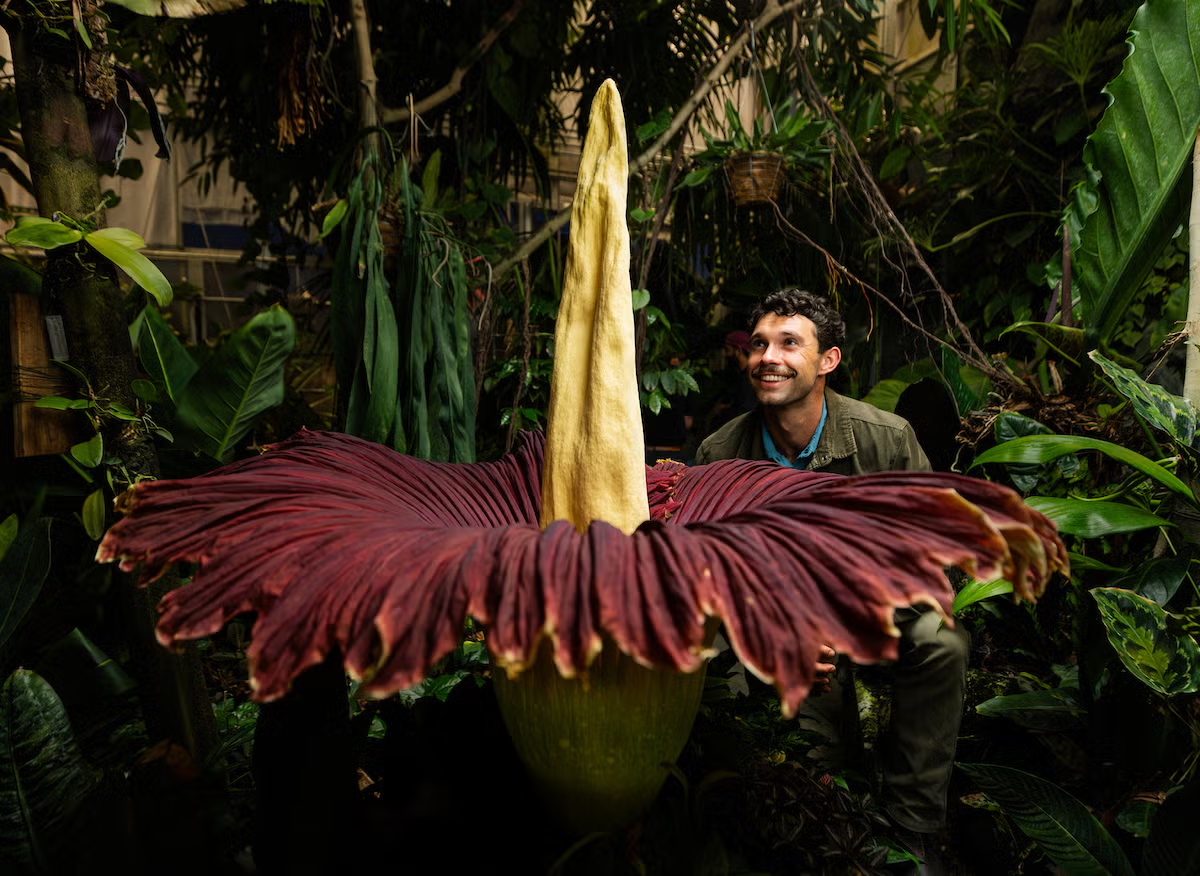
Among the botanical world’s most extraordinary phenomena is the Amorphophallus titanum, commonly known as the corpse flower. Native to the rainforests of Sumatra, this plant has captured human fascination for centuries due to its enormous size, rare blooms, and distinctive odor reminiscent of rotting flesh. Beyond its shock value, the corpse flower offers a compelling example of evolutionary strategy, tropical pollination ecology, and the interplay between attraction and deception in nature.
The Anatomy of a Giant
The corpse flower is one of the largest flowering structures on Earth. Its central spadix, which can reach over three meters in height, is surrounded by a leaf-like spathe that unfurls dramatically during bloom. The sheer scale of the plant is matched by its unusual lifecycle; Amorphophallus titanum spends years accumulating energy in an underground corm before producing a single flowering event.
This energy-intensive bloom is a testament to evolutionary specialization. The sporadic and rare flowering ensures that when the plant does emerge, it maximizes the potential for pollination while conserving resources during dormancy.
Spadix and Spathe: Functional Design
The spadix serves both reproductive and sensory roles. The lower section contains the female flowers, while the upper section houses male flowers that mature sequentially to prevent self-pollination. The spathe, often deep maroon on the interior, mimics the appearance of decaying flesh. This visual cue complements the plant’s chemical signaling, creating a multi-sensory attractant for pollinators.
The combination of size, color, and odor exemplifies how form and function intertwine to achieve reproductive success in the dense and competitive tropical environment.
Carrion Mimicry and Pollination Strategy
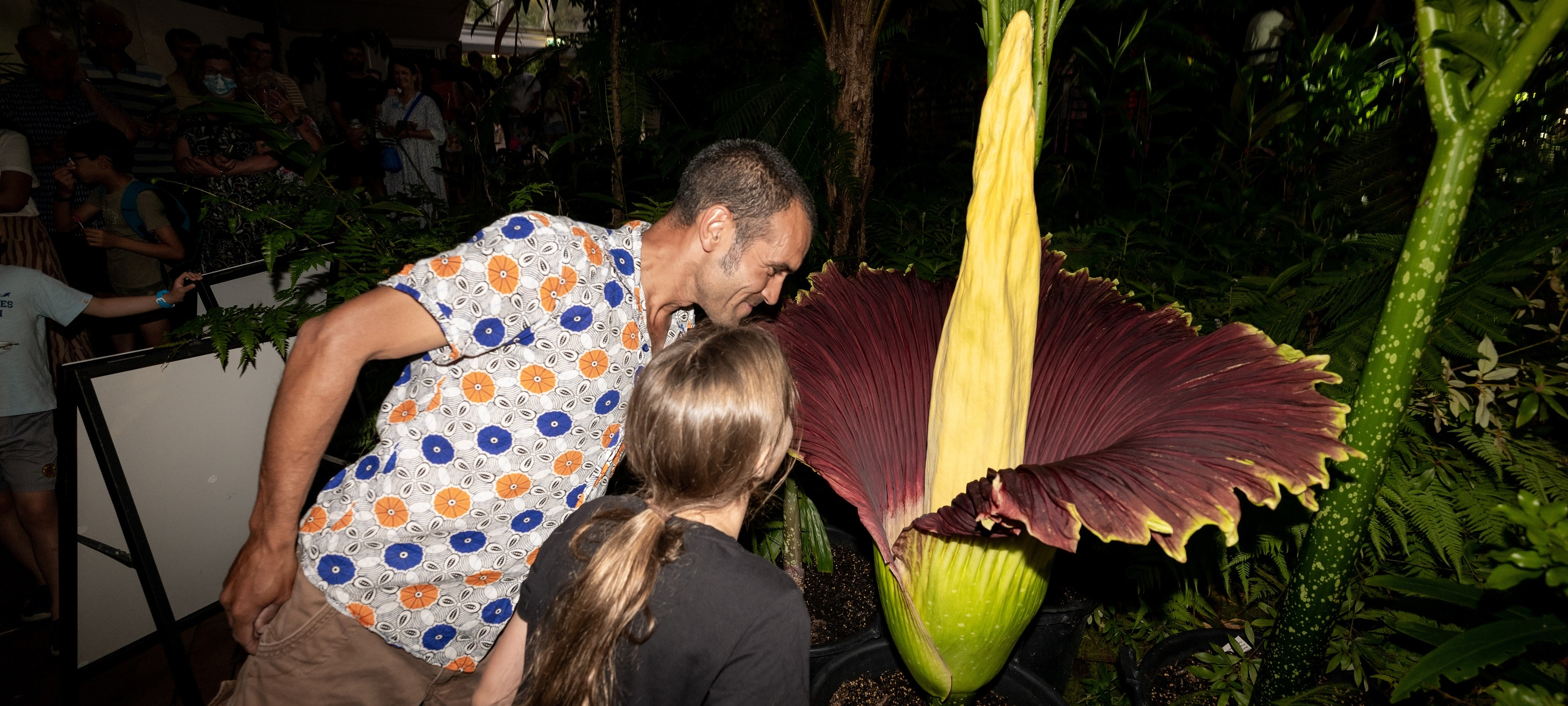
Amorphophallus titanum employs carrion mimicry, producing a strong scent similar to decomposing organic matter. This adaptation attracts saprophagous insects such as carrion beetles and flesh flies, which normally seek dead animals to feed or lay eggs. Upon landing, these insects inadvertently collect pollen from the male flowers and transfer it to other blooms, completing the plant’s reproductive cycle.
The corpse flower’s strategy demonstrates evolutionary ingenuity. By mimicking a resource rather than providing one, the plant leverages the sensory biases of insects. The bloom’s timing, often in the evening or at night, further aligns with pollinator activity, enhancing the likelihood of cross-pollination.
Sequential Flower Maturation
A critical aspect of corpse flower reproduction is the sequential maturation of male and female flowers. Female flowers become receptive before the male flowers release pollen, reducing self-pollination and promoting genetic diversity. This timing ensures that visiting insects carry pollen from one plant to another rather than fertilizing the same individual, exemplifying the precision of evolutionary design.
Lifecycle and Dormancy
The life of Amorphophallus titanum is dominated by cycles of growth, dormancy, and bloom. For most of its life, the plant exists as a large underground corm, storing nutrients and building energy reserves. During dormant periods, the corm supports a single, towering leaf that resembles a small tree, photosynthesizing to sustain the plant.
This long preparation period underscores the resource-intensive nature of its reproductive strategy. Blooming too frequently would deplete reserves and reduce reproductive success, while rare, dramatic flowering events optimize visibility to pollinators across the forest.
Ecological Significance
Beyond its spectacle, the corpse flower plays a significant ecological role. By attracting carrion insects, it participates in local nutrient and energy cycles. The plant’s interactions demonstrate how even seemingly deceptive organisms can influence ecosystem dynamics. Insects visiting the bloom may also serve as prey for higher trophic levels, integrating the corpse flower into a broader food web.
Key ecological contributions of Amorphophallus titanum include:
-
Pollinator attraction: Carrion beetles, flesh flies, and other insects are drawn to the odor and color.
-
Cross-pollination facilitation: Sequential flower maturation ensures genetic diversity.
-
Nutrient cycling: Decomposition of plant material enriches soil and supports forest regeneration.
-
Food web integration: Visiting insects may be prey for birds and small mammals, connecting trophic levels.
-
Biodiversity support: By influencing insect populations and soil health, it contributes indirectly to broader ecosystem stability.
Additionally, the decomposition of fallen leaves and plant material from the corpse flower contributes to soil fertility, supporting forest regeneration and biodiversity. This integration emphasizes that extreme adaptations often have cascading ecological effects.
Evolutionary Context
Carrion mimicry is not unique to Amorphophallus titanum, but the plant represents one of the most extreme examples in terms of size and olfactory impact. Its evolution reflects pressures of tropical competition, where attracting limited pollinators requires bold strategies. By investing in a rare but highly effective bloom, the corpse flower maximizes reproductive success while minimizing energy expenditure during dormancy.
Comparative studies with related aroid species reveal variations in spathe coloration, odor intensity, and flowering frequency, illustrating adaptive responses to specific pollinator communities. Such comparisons deepen our understanding of plant evolution in complex ecological networks.
| Feature | Description |
|---|---|
| Height of Spadix | Up to 3 meters (10 feet) |
| Spathe Color | Deep maroon inside, green outside |
| Odor | Strong scent of rotting flesh (carrion) |
| Flowering Frequency | Rare; typically every 7–10 years |
| Male/Female Flower Arrangement | Sequential maturation; female flowers first |
| Pollinators | Carrion beetles, flesh flies, other saprophagous insects |
| Dormancy | Underground corm stores energy for years |
| Ecological Role | Nutrient cycling, pollination, supporting food webs |
| Conservation Status | Vulnerable; threatened by deforestation and habitat loss |
This combination of extreme size, striking coloration, and potent odor allows Amorphophallus titanum to effectively compete for pollinator attention in dense tropical forests. By synchronizing its rare blooms with the activity of carrion insects, the corpse flower maximizes cross-pollination opportunities while conserving energy during long periods of dormancy. These adaptations highlight the delicate balance between ecological strategy and evolutionary investment, illustrating how even seemingly grotesque traits serve vital roles in survival and reproduction.
Cultural Fascination and Botanical Study
The corpse flower has long captivated human imagination. Early European explorers documented its massive size and pungent odor, often sensationalizing the plant in botanical literature. Today, public interest in blooming events has turned corpse flowers into popular attractions in botanical gardens worldwide, combining education, conservation awareness, and scientific observation.
Botanical studies of Amorphophallus titanum provide insights into tropical plant physiology, reproductive ecology, and chemical signaling. Understanding its odor-producing compounds, such as dimethyl trisulfide, informs broader research in plant-insect interactions and chemical ecology.
Conservation Challenges
Native to Sumatra’s diminishing rainforest, the corpse flower faces threats from habitat loss, deforestation, and climate change. Its reliance on specific pollinators and microclimatic conditions makes it sensitive to environmental disruption. Conservation strategies include habitat preservation, ex situ cultivation in botanical gardens, and research on pollination biology to support genetic diversity.
Protecting Amorphophallus titanum ensures that both its ecological function and cultural value endure. These efforts highlight the broader imperative of conserving tropical biodiversity in the face of rapid human-induced change.
Research and Technological Insights
Scientific research on corpse flowers extends beyond ecology. Studies of their volatile organic compounds inform chemical ecology, while their unique growth patterns offer lessons in resource allocation and energy efficiency. Additionally, understanding sequential flower maturation and pollinator behavior provides models for agricultural and horticultural applications.
Emerging biotechnological approaches explore odor compounds as natural insect attractants or repellents, demonstrating how studying a single species can yield broader practical applications.
Key Takeaways
-
Amorphophallus titanum, or corpse flower, is a giant tropical plant known for its rare, enormous blooms and strong odor.
-
Carrion mimicry attracts specific pollinators, ensuring cross-pollination and genetic diversity.
-
Sequential maturation of male and female flowers prevents self-pollination.
-
The plant spends most of its life in dormancy, storing energy in an underground corm.
-
Ecologically, corpse flowers contribute to nutrient cycling and forest food webs.
-
Extreme adaptations reflect evolutionary pressures in competitive tropical ecosystems.
-
Cultural fascination and botanical studies enhance public engagement and scientific understanding.
-
Conservation is critical due to habitat loss, specialized pollinators, and climate sensitivity.
Conclusion
The corpse flower exemplifies the extraordinary intersection of beauty, decay, and evolutionary ingenuity. Amorphophallus titanum captivates the imagination with its immense size and pungent odor, while simultaneously showcasing complex ecological strategies and adaptive precision. Studying this remarkable species deepens our appreciation for tropical botany, pollination ecology, and the intricate webs of life that sustain rainforest ecosystems. By conserving and understanding these natural wonders, we preserve not only unique botanical phenomena but also the knowledge and inspiration they provide.