Can Plants Understand Humans and Communicate with Them?
February 20, 2026
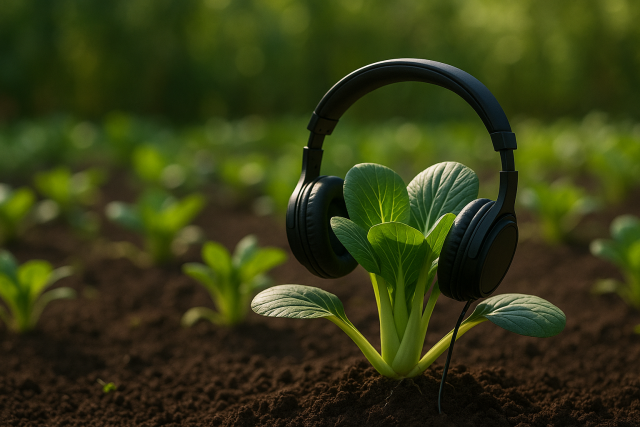
The idea that plants might understand humans and engage in a kind of dialogue seems both fantastical and fascinating at first glance. We talk to flowers, thank the garden for its yield, and worry when our favorite plant starts to wilt. Many horticulturists and gardeners claim: “Talk to your plants—they feel care,” or “They respond to your voice.” In practice, this becomes part of a routine of plant care and sometimes a philosophical habit, connecting humans with nature.
But what lies behind this emotional attachment? Do plants truly understand us, or is everything we perceive as “interaction” merely a reflection of human emotions and psychological mechanisms? And do scientific experiments support the possibility of “communication” with plants, or is it just a myth?
To answer these questions, it is necessary to examine several aspects: the physiological sensitivity of plants, the psychological and cultural predispositions to perceive them as “beings,” and real research investigating plant responses to external stimuli.
Why Gardeners Recommend Talking to Plants
Talking to plants is a widespread practice in many cultures and among modern gardeners. In India, Japan, and Europe, one can often hear the advice: “Speak to your flowers—they will grow better.” Experienced collectors of orchids, ficus, and phalaenopsis claim that regular interaction has a positive effect—plants grow faster, bloom more profusely, and maintain healthy leaves longer.
Why does this advice seem plausible? First, it promotes more attentive care. When a person talks to a plant, they approach it more closely, carefully examining its leaves, soil, and roots. They notice subtle changes and respond promptly—watering, loosening the soil, trimming dry shoots. In this sense, “talking” to a plant is a tool for care and attention, not a magical command that triggers growth.
Second, speech is accompanied by exhalation of carbon dioxide. CO₂ participates in photosynthesis, and although its concentration from a casual conversation is minimal, it can create a local environment slightly favorable for nutrient absorption. Thus, recommending talking to plants has an indirect physiological effect, reinforced by the psychological attachment it encourages.
Finally, the emotional aspect plays a key role. Regular interaction creates a sense of presence, responsibility, and care. Humans observe the life of the plant, which reduces stress and fosters a sense of involvement and attachment. Even if the plant does not understand words, the experience of emotional dialogue is real and tangible.
Scientific Experiments on Interaction with Plants
The question of plant responses to sound and human presence has been studied since the mid-20th century. In the 1960s and 1970s, experiments exposed plants to various musical influences. Results showed accelerated growth with soft music and slowed growth with harsh sounds. However, these early studies often had methodological weaknesses, such as lack of controls, small sample sizes, and limited repeatability.
Modern experiments focus on vibrations and mechanical stimuli. Plants perceive vibrations, including sound waves. For example, certain frequencies can activate genes associated with growth and stress responses. The phenomenon of thigmomorphogenesis shows that regular mechanical stimulation (lightly touching stems or leaves) strengthens the plant structure, making the stem thicker and more resilient.
Interesting studies involved plant responses to insect damage. Researchers found that plants can distinguish vibrations created by chewing caterpillars and respond by increasing production of defensive chemical compounds. This demonstrates the plant’s ability to perceive its environment and adapt.
However, it is important to emphasize: none of these studies indicate that plants have conscious understanding of human speech. They respond to physical stimuli but cannot interpret the meaning of words.
 Understanding and Emotional Connection: Boundaries and Possibilities
From a human perspective, understanding implies consciousness, the interpretation of signals, and the ability to provide an intentional response. Plants lack a brain and a nervous system, so they cannot “understand” humans in the usual sense.
Nevertheless, plants are highly sensitive to their environment. Roots can sense the direction of moisture, leaves respond to light and temperature, and damaged areas trigger protective responses throughout the organism. Some researchers describe this as “distributed information processing,” highlighting the complexity of biochemical and electrical signaling within plants.
From a psychological standpoint, anthropomorphism—the tendency to attribute human qualities to living objects—plays a role. When a plant blooms after care, we perceive it as gratitude; when it wilts, as discontent. This internal response makes the interaction real for humans. Even if it is one-sided, the emotional value exists.
Talking to a plant functions as a form of therapy. It reduces stress, fosters responsibility, and encourages mindfulness. Psychological studies confirm that plant care improves mood, concentration, and emotional resilience. Thus, the human-plant connection is real, even though it operates on the level of perception and feeling, not conscious communication.
Communication Through Actions: Interaction Without Words
We can view human-plant interaction as communication through the environment. Humans create conditions—watering, transplanting, adjusting light, tending soil. Plants respond with physiological changes—growth, flowering, or wilting.
This process can be called ecological communication: the exchange of signals through environmental changes rather than language. Humans influence plants, plants respond, and a dynamic develops that feels like dialogue.
Gardening practice supports this idea. Planting, tending, and observing a plant become rituals. Even if a plant does not consciously understand humans, it becomes part of the human emotional experience.
It is important to note that such interactions develop attentiveness, patience, and observational skills in humans—qualities often lost in the digital age, where most processes are instant and abstract. In this sense, plants serve as intermediaries for restoring the internal rhythm of life.
Key Takeaways
-
Plants do not have consciousness and cannot understand humans in the usual sense.
-
They respond to physical stimuli, including light, vibration, touch, and chemical signals.
-
Talking to and caring for plants enhances human attentiveness and emotional attachment.
-
Scientific experiments show plants adapt to environmental conditions and respond to external stimuli.
-
Emotional connection with plants is valuable for psychological well-being, even if it is one-sided.
Conclusion
From a scientific perspective, plants do not possess consciousness and cannot understand humans as we understand each other. They respond to physical stimuli—light, touch, vibration, and chemical signals. Yet their reactivity is complex and multifaceted, and their ability to adapt demonstrates remarkable biological sensitivity.
The emotional aspect of interacting with plants is real. Talking to them, caring for them, and observing them fosters responsibility, empathy, and a sense of participation in life. Even if the dialogue is one-sided, it is meaningful for humans.
We can say that plants help humans better understand themselves—their emotions, pace of life, and connection to nature. They do not speak or listen, but their silent responses create a form of dialogue through which humans learn mindfulness, care, and patience.