Cacao and Cosmos: The Tree That Fed Civilizations
January 31, 2026
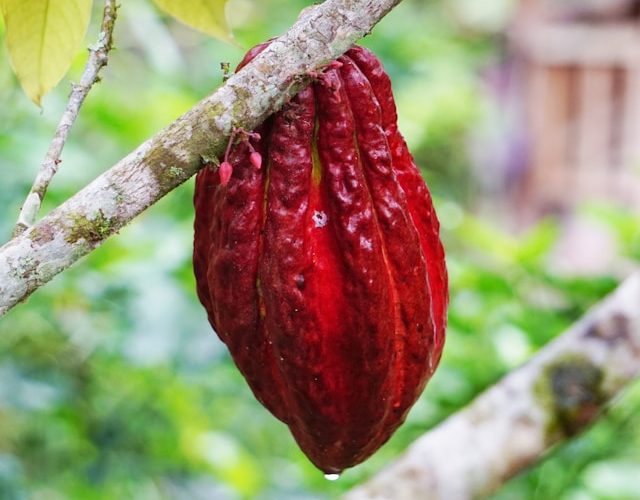
Few plants have shaped human history as profoundly as cacao. Long before it became a global commodity or a symbol of indulgence, Theobroma cacao stood at the center of cosmology, economy, and ecology for entire civilizations. To understand cacao is to look beyond chocolate and into a story of sacred rituals, transcontinental trade, and deep relationships between humans and tropical landscapes.
Theobroma Cacao: A Tree with a Name and a Claim
The scientific name Theobroma cacao translates from Greek as “food of the gods.” While coined by Carl Linnaeus in the 18th century, the phrase captures something ancient cultures already believed: cacao was not merely nourishing—it was meaningful.
Native to the tropical rainforests of Mesoamerica and the upper Amazon basin, cacao is a small understory tree that thrives in humid, shaded environments. It produces pods directly from its trunk and branches, a trait known as cauliflory, which already sets it apart visually and symbolically. Inside each pod are seeds surrounded by sweet pulp—the raw material that, after fermentation and processing, becomes cacao.
This botanical specificity matters. Cacao does not grow everywhere, and it does not tolerate neglect. Its demands shaped how people cultivated land, organized labor, and built trade networks.
Fun Fact
-
Cacao pods can be red, yellow, or green, and each pod contains 20–60 seeds.
-
The pods grow directly from the trunk and branches (cauliflory), a rare trait that makes the tree visually unique.
-
Ancient Maya iconography often depicts gods holding cacao pods or pouring cacao beverages in ritual contexts.
This illustrates how the tree’s physical characteristics were intimately connected to its cultural and ritual significance.
Origins in the Rainforest: Ecology Before Empire
Before cacao fed civilizations, it belonged to complex tropical ecosystems. It evolved alongside specific pollinators—tiny midges—and relied on stable forest microclimates. Unlike crops that flourish in open fields, cacao required forest cover, encouraging agroforestry rather than deforestation.
Early human use of cacao likely began with the pulp rather than the seeds. Archaeological evidence suggests that fermented cacao beverages existed as early as 1900 BCE. Over time, people learned to process the bitter seeds, unlocking new culinary and ritual possibilities.
This slow integration into human culture reflects a broader pattern in ethnobotany: plants that require care often foster long-term relationships rather than extractive use.
Cacao in Mesoamerican Cosmology
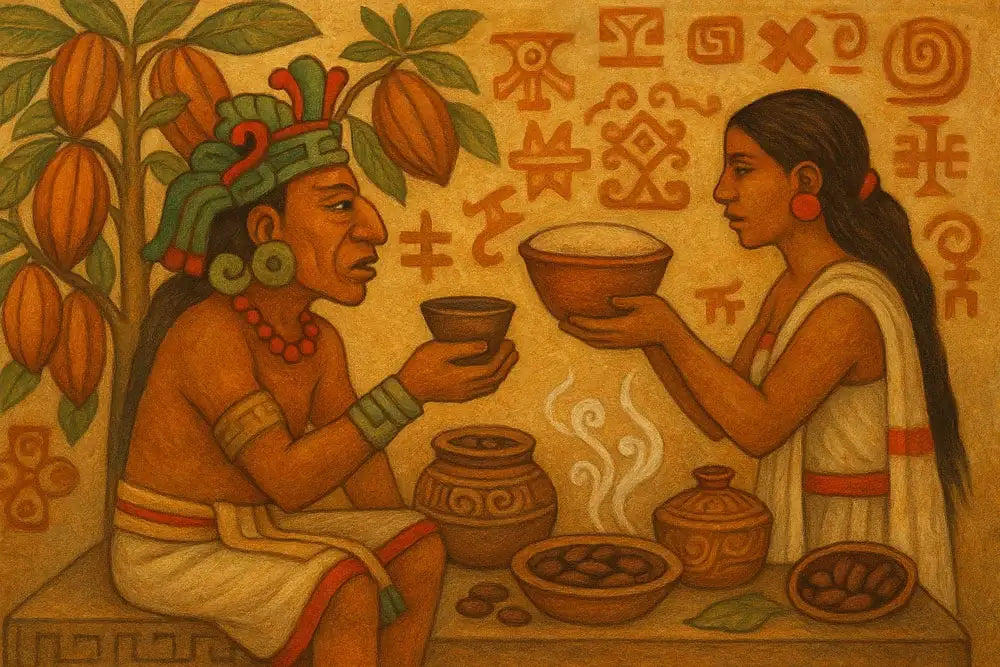
For the Olmec, Maya, and later the Aztec civilizations, cacao occupied a space between sustenance and symbolism. It appeared in myths of creation, divine lineage, and cosmic balance.
The Maya: Cacao as Sacred Substance
Maya iconography frequently depicts gods interacting with cacao. In some creation narratives, cacao trees emerge from the bodies of sacrificed deities, linking the plant to blood, fertility, and regeneration. Drinking cacao was often part of rites marking birth, marriage, and death.
Cacao beverages were typically bitter, spiced with chili, maize, or flowers. Consumed cold and often frothed, they were reserved for elites, priests, and ritual contexts. The act of drinking cacao was less about pleasure and more about participation in a sacred order.
The Aztec: Currency and Power
Among the Aztecs, cacao beans functioned as currency. They were taxed, stored, counted, and traded across vast distances. A turkey might cost a few hundred beans; a night with a courtesan, several dozen.
This dual role—as sacred drink and economic unit—made cacao a rare example of a plant that simultaneously anchored spiritual life and material exchange. Control over cacao-producing regions became a political priority, shaping imperial expansion and tribute systems.
Trade Routes and Early Globalization
Cacao’s ecological limitations meant it had to move if societies wanted more of it. This necessity gave rise to extensive trade networks long before European contact.
Cacao traveled from lowland rainforests to highland cities, from farmers to merchants to rulers. Along the way, it accumulated layers of meaning. A cacao bean carried not only value, but origin, labor, and status.
When Europeans arrived in the Americas, they encountered cacao through these established systems. Initially resistant to its bitterness, they gradually adapted it by adding sugar, cinnamon, and milk—transforming both flavor and cultural meaning.
The European adoption of cacao marked an early moment of globalization, where a plant rooted in Indigenous cosmology became a global commodity.
From Sacred Substance to Global Commodity
Cacao’s significance changed over time, shifting from sacred drink to currency, then to a colonial commodity, and finally to modern chocolate. The following table summarizes how its role evolved across eras and regions:
| Era / Region | Role of Cacao | Key Notes |
|---|---|---|
| Olmec & Maya | Sacred beverage, ritual use | Bitter, spiced, frothy |
| Aztec | Currency, tribute | Beans counted, stored, traded |
| European colonization | Luxury commodity | Sweetened, combined with milk & sugar |
| Modern | Global chocolate industry | Industrialized, ethical challenges, artisanal revival |
This overview highlights that cacao was never just a foodstuff—it consistently carried cultural, economic, and spiritual weight across civilizations.
Colonial Transformation and Ethical Costs
The colonial era radically altered cacao’s trajectory. What had been cultivated within diversified ecosystems and cultural frameworks was increasingly grown in monocultures for export.
Plantations expanded across Africa, Southeast Asia, and the Caribbean. While this spread cacao’s reach, it also severed many of its ecological and cultural roots. Enslaved and coerced labor became integral to cacao production, a legacy that still shapes the industry today.
Modern Ethical Challenges in Cacao Production
-
Child labor and forced labor in plantations
-
Monoculture and biodiversity loss
-
Inequitable profit distribution along the supply chain
-
Climate vulnerability and crop failure
-
Efforts in fair trade, agroforestry, and Indigenous stewardship
Understanding cacao’s history requires acknowledging this rupture. The “food of the gods” became entangled with systems of exploitation, turning a sacred plant into a symbol of both pleasure and inequality.
Ethnobotany: Knowledge Embedded in Practice
Ethnobotany examines how cultures understand and use plants. Cacao is a textbook case of how botanical knowledge is not abstract, but lived.
Indigenous farmers understood cacao’s needs: shade, companion plants, soil moisture, seasonal rhythms. They selected varieties for flavor, disease resistance, and ceremonial use. This knowledge was transmitted through practice rather than written manuals.
Modern science has only recently begun to rediscover the value of these systems. Agroforestry models inspired by traditional cacao cultivation are now seen as more sustainable than industrial plantations, benefiting biodiversity and climate resilience.
Chemistry, Stimulation, and Meaning
Cacao contains compounds such as theobromine, caffeine, and phenylethylamine. These affect mood, alertness, and cardiovascular function. In premodern contexts, such effects were often interpreted spiritually.
The stimulation cacao provided was subtle but noticeable—energizing without intoxication. This made it suitable for ritual focus, extended ceremonies, and social bonding. Unlike alcohol, cacao sharpened awareness rather than dulling it.
The name Theobroma is therefore more than poetic. Cacao altered human experience in ways that felt transcendent, reinforcing its association with gods and cosmic order.
From Ritual Drink to Global Comfort Food
Today, cacao is most commonly encountered as chocolate—sweet, solid, and ubiquitous. This transformation reflects changing cultural priorities.
Industrial processing emphasized shelf life, uniformity, and mass appeal. Much of cacao’s bitterness, complexity, and ritual context was stripped away. Chocolate became comfort rather than ceremony.
Yet this shift is not complete. Artisanal chocolate makers, Indigenous cooperatives, and ethical sourcing movements are attempting to reconnect cacao with its origins. Single-origin bars, minimal processing, and transparency echo older relationships between plant and people.
Cacao and Tropical Ecology Today
Cacao’s future is uncertain. Climate change threatens the narrow ecological window in which it thrives. Rising temperatures, altered rainfall, and disease pressure are already affecting yields.
Ironically, the traditional agroforestry systems that once sustained cacao may offer solutions. Shade-grown cacao supports biodiversity, stabilizes microclimates, and reduces vulnerability. In this sense, ancient practices may prove more resilient than modern ones.
Preserving cacao is therefore not only an economic concern, but an ecological and cultural one.
Cacao as a Lens on Civilization
Cacao’s story illustrates how plants can shape civilizations – not passively, but actively. It influenced trade routes, social hierarchies, religious rituals, and global economies.
Unlike staple grains, cacao was never about survival alone. It was about meaning, connection, and value. That is why it became currency, sacrament, and eventually obsession.
To study cacao is to see how deeply human history is entangled with the botanical world.
Key Takeaways
-
Theobroma cacao originated in tropical rainforests and requires specific ecological conditions.
-
Mesoamerican civilizations integrated cacao into cosmology, ritual, and economy.
-
Cacao functioned as both sacred substance and currency.
-
Trade networks around cacao predated European contact.
-
Colonial expansion transformed cacao into a global commodity with ethical costs.
-
Traditional agroforestry systems offer sustainable models for cacao cultivation.
-
Cacao’s chemical effects contributed to its spiritual and social roles.
-
Modern chocolate reflects a cultural shift away from ritual toward convenience.
Conclusion
Cacao is not just an ingredient—it is a historical force. From rainforest understory to ritual cup, from sacred seed to global commodity, it has fed bodies, economies, and imaginations. Its journey reveals how civilizations grow around plants that offer more than calories: plants that invite meaning.
Understanding cacao in its full context challenges us to reconsider our relationship with the natural world. The tree that once connected humans to the cosmos still stands, asking whether we will treat it as a resource—or as a partner in history.