Blue Lotus Dreams: Ancient Egypt’s Botanical Symbolism
January 31, 2026
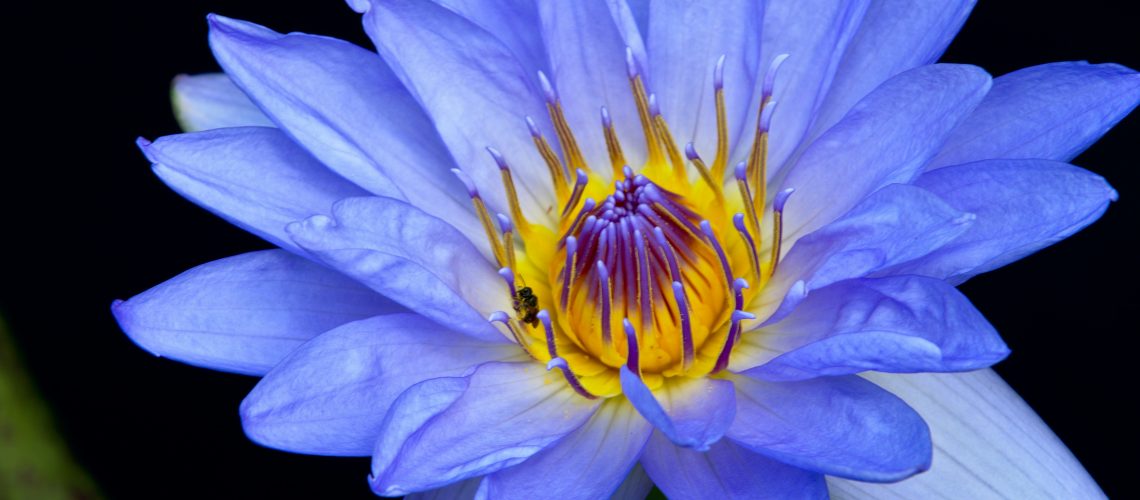
The blue lotus was more than a beautiful flower in ancient Egypt—it was a vessel of meaning, ritual, and imagination. Appearing in temple reliefs, funerary art, medical texts, and poetry, this aquatic plant occupied a unique place where nature, religion, and human consciousness met. Exploring the symbolism of the blue lotus offers insight into how the ancient Egyptians understood life, rebirth, pleasure, and the unseen forces shaping the world around them.
The Blue Lotus: A Plant Rooted in the Nile World
The plant commonly referred to as the blue lotus is Nymphaea caerulea, a water lily native to the Nile and surrounding wetlands. It thrives in slow-moving or still waters, opening its fragrant blue petals at dawn and closing them at dusk. This daily rhythm was not a trivial botanical detail—it formed the foundation of the flower’s symbolic power.
In a landscape defined by the Nile’s cycles of flooding and renewal, plants were read as signs of cosmic order. The blue lotus, emerging clean and luminous from muddy water each morning, embodied the idea that life could rise from chaos. Its visibility along riverbanks and in temple pools ensured that it was not an abstract symbol but a lived, familiar presence in Egyptian daily life.
Cosmic Birth and the Flower of Creation
One of the earliest symbolic roles of the blue lotus appears in Egyptian creation myths. In several theological traditions, the flower is described as rising from the primordial waters of Nun at the beginning of time. From its opening bloom emerged the sun god—often Ra or Nefertum—bringing light, order, and life into the universe.
This association linked the blue lotus directly to cosmogenesis. The act of blooming was not merely growth; it was creation itself. Artistic representations sometimes show a child deity standing within a lotus blossom, reinforcing the idea that the flower was a womb of divine emergence.
Core Symbolic Meanings of the Blue Lotus in Egyptian Cosmology
-
Emergence from primordial chaos (Nun)
-
Birth of the sun and daily solar renewal
-
Divine creation through natural cycles
-
Purity arising from fertile disorder
-
Continuity between cosmic and earthly rhythms
The symbolism worked because it mirrored observable reality. Each morning, the lotus appeared anew, just as the sun rose each day. Myth and nature reinforced one another, making the cosmic story tangible and persuasive.
Rebirth, the Afterlife, and Funerary Meaning
Beyond creation, the blue lotus became deeply tied to ideas of rebirth and the afterlife. The ancient Egyptians did not view death as a final end but as a transition requiring careful preparation. Symbols that promised renewal were therefore essential in funerary contexts.
Lotus imagery appears frequently in tomb paintings, coffins, and papyri. The deceased is often shown holding or inhaling a lotus flower, an act believed to grant rejuvenation and the ability to be “reborn” in the next world. Chapter 81 of the Book of the Dead even includes a spell allowing the soul to transform into a lotus, ensuring resurrection and eternal youth.
In this context, the blue lotus functioned as a botanical guarantee of continuity. Just as the flower closed at night and opened again with the sun, so too could the dead awaken in the afterlife.
Sensory Pleasure and Sacred Intoxication
While its cosmic and funerary meanings are well known, the blue lotus also played a role in more intimate human experiences. Ancient Egyptian art frequently depicts banquets where guests wear lotus blossoms on their heads, inhale their scent, or hold the flower to their noses.
This was not purely decorative. The blue lotus contains alkaloids such as aporphine and nuciferine, compounds that can produce mild psychoactive effects when infused or consumed. These effects are associated with relaxation, euphoria, and altered perception—states that were likely interpreted as spiritually significant rather than recreational.
Rather than drawing a sharp line between sacred and sensual, Egyptian culture often merged the two. Pleasure was not seen as opposed to the divine but as a potential pathway to it. The lotus, with its fragrance and subtle effects, became a bridge between bodily enjoyment and spiritual openness.
Love, Eroticism, and Fertility Symbolism

The blue lotus also carried erotic and fertility-related meanings. In love poetry from the New Kingdom, the flower appears as a metaphor for desire, intimacy, and attraction. Lovers compare one another to lotuses or meet among lotus-filled waters, blending natural beauty with emotional longing.
This symbolism was reinforced by the flower’s association with regeneration and vitality. Its link to the youthful god Nefertum, often portrayed as eternally young and beautiful, made it a natural emblem of sexual energy and creative force.
Importantly, this erotic symbolism was not crude or hidden. It existed openly within a cultural framework that saw fertility as sacred and necessary for cosmic balance. The lotus thus represented not indulgence, but life-affirming continuity.
The Blue Lotus in Art and Visual Language
Egyptian art was highly symbolic, and the blue lotus became a visual shorthand for complex ideas. Columns in temples were sometimes designed to resemble lotus stalks and blossoms, turning architecture itself into a symbolic landscape of rebirth and order.
In reliefs and paintings, the flower often appears in symmetrical arrangements, reinforcing concepts of harmony and balance. When paired with the papyrus plant—symbol of Lower Egypt—the lotus could also express political unity, binding the land together through botanical imagery.
These artistic conventions ensured that the lotus communicated meaning instantly, even to those who could not read. The flower became part of a shared visual language that connected religion, politics, and daily life.
Ritual Use and Religious Practice
Beyond symbolism, the blue lotus was actively used in religious contexts. It was offered to gods in temples and included in ritual garlands. Priests cultivated lotus pools within sacred precincts, ensuring a steady supply for ceremonial purposes.
The flower’s role in rituals likely combined its visual beauty, fragrance, and psychoactive properties. Inhaling or ingesting lotus preparations may have aided meditative or trance-like states during ceremonies, enhancing communication with the divine.
Rather than seeing this as primitive or accidental, it is more accurate to view it as an early form of botanical knowledge. The Egyptians understood that certain plants affected mood and perception, and they integrated this understanding into structured religious practice.
Contexts in Which the Blue Lotus Was Used in Ancient Egypt
-
Temple offerings and priestly rituals
-
Funerary rites and afterlife symbolism
-
Banquets and elite social gatherings
-
Love poetry and erotic symbolism
-
Medicinal preparations and calming remedies
This wide range of uses demonstrates that the blue lotus was not confined to a single symbolic domain but operated as a unifying cultural element across religious, social, medical, and poetic life.
Medical and Botanical Knowledge
Ancient Egyptian medical texts, such as the Ebers Papyrus, reference the lotus among various plant-based remedies. While its symbolic roles dominate modern discussion, the flower also had practical applications.
Lotus extracts were used in treatments related to pain relief, calming the body, and possibly addressing heart-related ailments. These uses align with the known pharmacological properties of the plant’s compounds.
This dual role—symbolic and medicinal—reflects a broader Egyptian worldview in which healing involved both physical and spiritual dimensions. A plant that soothed the body and represented rebirth was particularly valuable in this holistic system.
Modern Interpretations and Misconceptions
In recent decades, the blue lotus has experienced a revival in popular culture, often marketed as an “ancient Egyptian psychedelic” or mystical intoxicant. While rooted in genuine historical use, these modern portrayals can oversimplify or exaggerate its effects.
The ancient Egyptians did not isolate compounds or pursue intense hallucination. The lotus was subtle, integrated into ritual, art, and social life rather than consumed for extreme experiences. Its power lay as much in meaning as in chemistry.
Understanding the blue lotus historically requires resisting the urge to project modern expectations onto ancient practices. Its significance was symbolic, cultural, and experiential in ways that do not map neatly onto contemporary categories.
The Blue Lotus as a Cultural Lens
Studying the blue lotus reveals how deeply the ancient Egyptians read meaning into the natural world. Plants were not passive resources; they were participants in cosmic order. The lotus, in particular, condensed ideas of creation, rebirth, pleasure, and divine presence into a single living form.
This approach contrasts with modern tendencies to separate science, religion, and aesthetics. In ancient Egypt, these domains overlapped continuously. The lotus was simultaneously a flower, a god, a medicine, and a metaphor.
By tracing its symbolism, we gain a clearer view of how ancient Egyptians understood existence itself—as a cycle of emergence, decay, and renewal, mirrored in the daily opening of a blue flower on the Nile.
Key Takeaways
-
The blue lotus (Nymphaea caerulea) was a central symbolic plant in ancient Egyptian culture.
-
Its daily blooming cycle made it a natural symbol of creation, rebirth, and solar renewal.
-
The flower played important roles in funerary beliefs and afterlife rituals.
-
Mild psychoactive properties contributed to its use in banquets and religious ceremonies.
-
The lotus symbolized pleasure, fertility, and youthful vitality without cultural stigma.
-
It appeared extensively in art, architecture, and visual symbolism.
-
Medical texts suggest it also had practical healing applications.
-
Modern interpretations often miss the subtlety of its historical role.
Conclusion
The blue lotus was not simply admired in ancient Egypt—it was understood. Through careful observation and symbolic imagination, the Egyptians transformed a native water flower into a powerful expression of their worldview. It stood at the intersection of nature and myth, body and spirit, life and afterlife.
By examining the blue lotus in its full cultural context, we see how a single plant can illuminate an entire civilization’s way of thinking. Its legacy reminds us that symbolism does not arise from abstraction alone, but from sustained, meaningful engagement with the living world.