Ethnobotany and Cognitive Traditions: Plants in Myth, Ritual, and Symbolism
March 22, 2026

Plants have accompanied humanity throughout history not only as sources of food, medicine, or materials, but also as carriers of meaning, symbols, and collective memory. In many cultures, specific plant species acquire special significance, becoming integral to myths, religious practices, and symbolic systems. They participate in shaping ideas about the world, life and death, the sacred and the everyday.
This topic is important because it reveals how natural objects are transformed into elements of thought. Through plants, humans do not simply interact with their environment—they interpret and structure it, creating complex cognitive models. Studying these processes helps us understand how cultural traditions are formed, how knowledge is transmitted, and how symbols become embedded in collective consciousness.
Ethnobotany as an Interdisciplinary Field
Ethnobotany examines the relationships between humans and plants in cultural, medicinal, and symbolic contexts. This field integrates anthropology, biology, history, linguistics, and religious studies, allowing researchers to view plants as components of complex cultural systems.
Unlike botany, which studies plants as biological organisms, ethnobotany focuses on how people perceive and use them. This includes not only practical applications—such as food or medicine—but also symbolic meanings.
For example, the same plant may serve as a remedy in one culture, a sacred object in another, and a symbolic marker in a third. This diversity demonstrates that plants become part of cognitive traditions—systems of knowledge and interpretation that shape how people understand the world.
Plants in Mythological Thinking
Mythology is one of the earliest ways humans organized their understanding of reality, and plants play a central role in it. They function as symbols, mediators, and even active agents through which the origins of the world and humanity are explained.
The World Tree and Cosmic Structure
One of the most persistent images is that of the world tree. In Norse mythology, this is Yggdrasil—a massive tree that connects different levels of the universe. Its roots extend into the underworld, its trunk stands in the human realm, and its branches reach the heavens.
Similar images appear in other traditions. In ancient Indian philosophy, there is the concept of an inverted tree whose roots are in the sky and branches on earth, symbolizing the dependence of the material world on the spiritual. In Slavic mythology, the tree often represents the axis of the world, linking different planes of existence.
This image is significant not only symbolically but also cognitively. It provides a model for structuring reality, allowing humans to conceptualize the world as an ordered and interconnected system.
 Transformation and the Origin of Plants
In many myths, plants originate from the bodies of gods, heroes, or spirits. These narratives assign them special meanings. In Greek mythology, the laurel tree is associated with the transformation of Daphne, which makes it a symbol of protection and immortality.
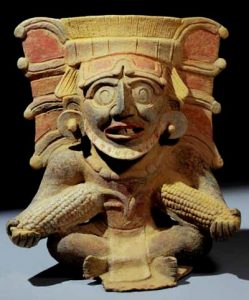
Similar motifs exist in other cultures. In some Indigenous American traditions, maize is seen as a divine gift or the result of sacrifice, making it a sacred symbol of life and sustenance.
Such myths demonstrate that plants become part of explanatory systems. They help people understand the origins of life and link natural phenomena to human experience.
Plants in Ritual and Religious Practice
Plants play a crucial role in religious rituals, where they act as intermediaries between humans and the sacred realm. Their use is often associated with transformation—both external and internal.
Sacred Plants and Their Meanings
In many religions, certain plants hold sacred status. For example, the Lotus in Hinduism and Buddhism symbolizes purity and spiritual awakening, as it grows in muddy water yet remains unstained.
The Olive tree in Mediterranean traditions is associated with peace and blessing. In biblical narratives, a dove brings an olive branch as a sign that the flood has ended, establishing it as a symbol of hope and renewal.
The Oak in European cultures is often linked to strength and divine authority. Among the Celts, the oak was considered a sacred tree through which communication with the divine was possible.
Ritual Use and Altered States of Consciousness
In some cultures, plants are used to alter states of consciousness, enabling participants to experience realities beyond ordinary perception.
These practices show that plants can function as tools for cognitive expansion. They allow individuals to enter states interpreted as spiritual encounters or deeper insights into existence.
Importantly, the meaning of such practices is shaped not only by biological effects but also by cultural interpretation. The same experience may be understood as medicinal, mystical, or religious depending on the cultural context.
Symbolism of Plants in Cultural Systems
Plants become part of symbolic systems that develop through art, literature, and everyday practices. Their meanings are preserved and transmitted across generations.
Emotional Symbolism
In European culture, flowers often express emotions. The rose symbolizes love, the lily purity, and the poppy remembrance and oblivion. These associations are widely used in literature, visual art, and social customs.
For example, the tradition of giving flowers reflects cultural codes that enable people to communicate feelings without words. This demonstrates how plants function as elements of nonverbal communication.
Political and Social Symbolism
Plants can also represent collective identity. The shamrock, for instance, is associated with Ireland and its cultural heritage. Similarly, many nations have symbolic plants linked to historical events or traditions.
In such cases, plants become part of collective memory, connecting individual experience to broader cultural narratives.
Cognitive Traditions and Perception of Nature
Cognitive traditions determine how people perceive and interpret plants. They include systems of knowledge, classification, and symbolism that are transmitted within cultures.
Classification and Knowledge
Different cultures classify plants in different ways. These classifications often reflect not only physical characteristics but also functions, symbolic meanings, and ritual roles.
For instance, a plant may be considered both medicinal and sacred. This indicates that knowledge about nature is not strictly divided into scientific and cultural domains but exists as an integrated system.
Language as a Tool of Interpretation
Language plays a crucial role in shaping plant meanings. Names, metaphors, and proverbs encode cultural associations.
Expressions involving trees or flowers are often used to describe human qualities. This shows that plants become part of cognitive models through which people understand themselves and the world.
Cross-Cultural Examples
Different cultures demonstrate diverse ways of integrating plants into symbolic and cognitive systems.
In Eastern traditions, plants are closely linked to philosophical ideas. The lotus represents spiritual development, while bamboo symbolizes resilience and flexibility. These images appear not only in religion but also in art and daily life.
In European traditions, plants play a significant role in Christian symbolism. Grapes, for example, are associated with spiritual life and sacrifice, as reflected in religious texts and rituals.
In Indigenous cultures, plants are often perceived as living beings with spiritual power. They may act as teachers, protectors, or intermediaries between worlds. This reflects a more integrated worldview, where humans are not separate from nature.
Core Functions of Plants in Culture
Plants fulfill several interconnected functions that highlight their role in cognitive traditions:
- symbolic — expressing abstract ideas and values;
- ritual — participating in religious practices and ceremonies;
- cognitive — shaping ways of thinking and interpreting reality;
- social — reinforcing collective identity and cultural memory.
These functions are intertwined, forming a complex system of meaning.
Key Takeaways
- Ethnobotany views plants as elements of cultural and cognitive systems, not merely biological entities.
- Plants play a central role in myths, helping structure human understanding of the world.
- In rituals, they act as mediators between humans and the sacred realm.
- Plant symbolism is shaped by language, art, and social practices.
- Cognitive traditions determine how nature is perceived and interpreted.
Conclusion
Ethnobotany demonstrates that plants are not just components of the natural environment but essential elements of human cultural and cognitive life. Through myths, rituals, and symbolic systems, they become tools for understanding the world and transmitting knowledge.
Recognizing the role of plants in culture allows us to see more clearly how human perceptions of reality are formed. Plants are not merely objects of observation; they are active participants in the creation of meaning, shaping human experience and cultural heritage.