Sacred Groves: Living Temples of Biodiversity
February 20, 2026
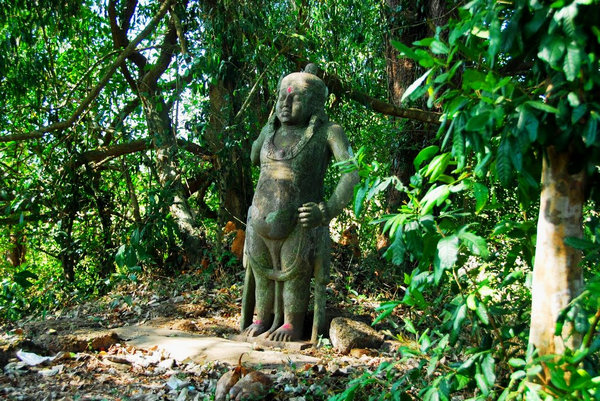
Sacred groves represent one of the oldest forms of environmental protection, emerging long before the creation of nature reserves, national parks, or environmental legislation. In different parts of the world — from India to West Africa and from the Balkans to the British Isles — small patches of forest have been preserved for centuries through faith, ritual, and collective prohibitions. These territories were perceived as the dwelling places of deities, ancestral spirits, or sacred forces. They could not be cut down, ploughed, or used for hunting.
Today, as the world faces accelerating biodiversity loss, the phenomenon of sacred groves has become especially relevant. It demonstrates that sustainable environmental management can be rooted not only in scientific knowledge and legal frameworks but also in cultural norms. Understanding how spiritual practices have maintained ecosystems for centuries allows us to reconsider the relationship between society and nature.
Sacred Groves as Mechanisms of Collective Responsibility
A sacred grove is not merely a forested area. It is a space governed by a special code of conduct. In many cultures, entering such a territory required rituals of purification. Violating the prohibition against cutting trees or hunting was regarded not simply as an economic offense but as a moral and spiritual transgression.
From an ecological perspective, this created a lasting effect. While surrounding lands were converted into agricultural fields, old-growth trees, mycorrhizal networks, and rare species of plants and animals were preserved within the grove. These areas became islands of primary nature within transformed landscapes.
The cause-and-effect relationship is clear: sacred status produced stable social norms. Fear of angering spirits or deities outweighed the economic benefits of deforestation. As a result, a form of “unwritten ecological law” emerged, transmitted through myths and rituals.
This system functioned for centuries without external enforcement. Its resilience can be explained by the fact that it was embedded in worldview. People protected the forest not because legislation demanded it, but because it aligned with their understanding of the world.
India: Forests as Open-Air Temples
India is home to thousands of sacred groves, known by regional names such as devarakadu, kavu, and oran. They are dedicated to local deities or guardian spirits. In the state of Kerala, for example, kavu groves are often associated with serpent worship. Within these sites, moist tropical forests are preserved, harboring rare orchids and medicinal plants.
In Meghalaya, the Khasi community protects the Mawphlang Sacred Grove, where even removing a fallen leaf is forbidden. This rule creates unique conditions for the accumulation of organic matter and the preservation of soil microfauna. Biologists note that such territories serve as genetic reservoirs for species that have disappeared from surrounding agricultural landscapes.
In Rajasthan, oran are sacred pasture groves dedicated to local protective deities. Despite the arid climate, these areas maintain trees and shrubs that support microclimates and biodiversity.
A distinctive feature of the Indian experience is that sacred status is often reinforced through temple systems. Even if original myths evolve, the grove continues to exist as a religious space. Thus, spiritual practice directly sustains ecological stability.
Africa: Forests as Abodes of Ancestors
In West Africa, sacred forests are closely linked to ancestral cults and animistic beliefs. In Ghana, for instance, the Boabeng-Fiema Monkey Sanctuary is known as a refuge for colobus and mona monkeys. Local communities consider them sacred animals and prohibit hunting. As a result, primate populations persist within a relatively small area.
In Nigeria, the Osun-Osogbo Sacred Grove is dedicated to the river goddess Osun. The forest preserves not only trees but also cultural objects connected with annual festivals. Its ecosystem plays a vital role as a watershed, maintaining the region’s hydrological balance.
In many African communities, sacred groves are located near water sources. Prohibitions against tree cutting prevent soil erosion and help retain moisture. Thus, spiritual practice directly supports essential natural resources.
The ecological effect emerges as a byproduct of spiritual motivation. People protect the grove to maintain connection with their ancestors, yet simultaneously safeguard biodiversity.
 Europe: From Pagan Forests to Cultural Heritage
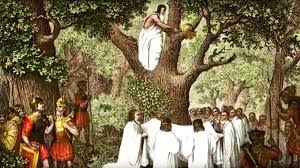
In Europe, the tradition of sacred groves dates back to Celtic and Germanic cults. Among the Celts, nemeton were sacred woodland spaces used for rituals. Roman authors described Germanic groves as places of worship.
With the spread of Christianity, many such territories were reinterpreted. Chapels or monasteries were built on their sites. Nevertheless, trees were often preserved under their new sacred status.
An example is the oak sanctuary of Dodona in ancient Greece, where the rustling leaves were believed to carry divine voices. In Lithuania, patches of forest associated with pre-Christian traditions still survive.
The European context demonstrates that while sacred meanings may change, protective functions often remain. Even when religious beliefs transform, cultural memory sustains respectful attitudes toward particular landscapes.
Ecological Significance of Sacred Groves
From a scientific perspective, sacred groves fulfill several key functions:
-
Conservation of rare and endemic species.
-
Maintenance of genetic diversity.
-
Protection of water sources and soil cover.
-
Formation of stable microclimatic conditions.
Their small size does not diminish their importance. On the contrary, their compactness turns them into “biodiversity banks” within agricultural landscapes.
Research in India indicates that species density in some sacred groves exceeds that found in official forest reserves. This is often due to the absence of economic exploitation.
Comparative Overview
| Region | Specific Examples | Cultural Foundation | Ecological Effect |
|---|---|---|---|
| India | Mawphlang (Meghalaya), kavu in Kerala | Cult of local deities | Preservation of tropical forests and rare species |
| Ghana | Boabeng-Fiema | Sacred primate protection | Conservation of monkeys and forest ecosystems |
| Nigeria | Osun-Osogbo | Worship of river goddess | Watershed protection and forest preservation |
| Europe | Dodona, Baltic oak groves | Pagan and Christian traditions | Preservation of old-growth trees |
The table demonstrates that despite differences in religious systems, the ecological outcome is similar: limiting human interference creates stable natural refuges.
Contemporary Challenges and Prospects
Today sacred groves face pressures from urbanization, commercial logging, and the transformation of religious practices. When belief systems weaken, the internal mechanism of protection may also erode.
However, interest in biocultural heritage is growing. Ecologists and anthropologists increasingly recognize sacred groves as models of sustainable human–nature relationships. Including local communities in conservation programs helps preserve not only forests but also cultural identity.
This experience suggests that biodiversity protection is most effective when rooted in values. Legislation may prohibit deforestation, but only internal conviction ensures long-term sustainability.
Key Takeaways
-
Sacred groves are ancient forms of traditional environmental protection.
-
In India, Africa, and Europe, spiritual practices have supported forest ecosystem conservation.
-
Ecological benefits emerged as consequences of religious and cultural prohibitions.
-
These territories function as genetic reservoirs and watershed zones.
-
Integrating cultural values into environmental policy enhances sustainability.
Conclusion
Sacred groves demonstrate that biodiversity can be preserved through spiritual worldviews. Where forests are perceived as the dwelling places of deities or ancestors, a stable model of respectful environmental interaction emerges.
This phenomenon reminds us that ecology is not only a science of species but also a culture of relationship with the Earth. Sacred groves remain living temples of biodiversity, where spiritual practice and ecological resilience form a unified system.